As India flexed their muscles and overpowered West Indies to a 3-0 T20I series whitewash in Kolkata, we take a look at the team’s immediate gains and few key takeaways in the build up to the T20 World Cup in Australia. The Rohit Sharma-led Indian team proved too good for the visitors in the shortest […]

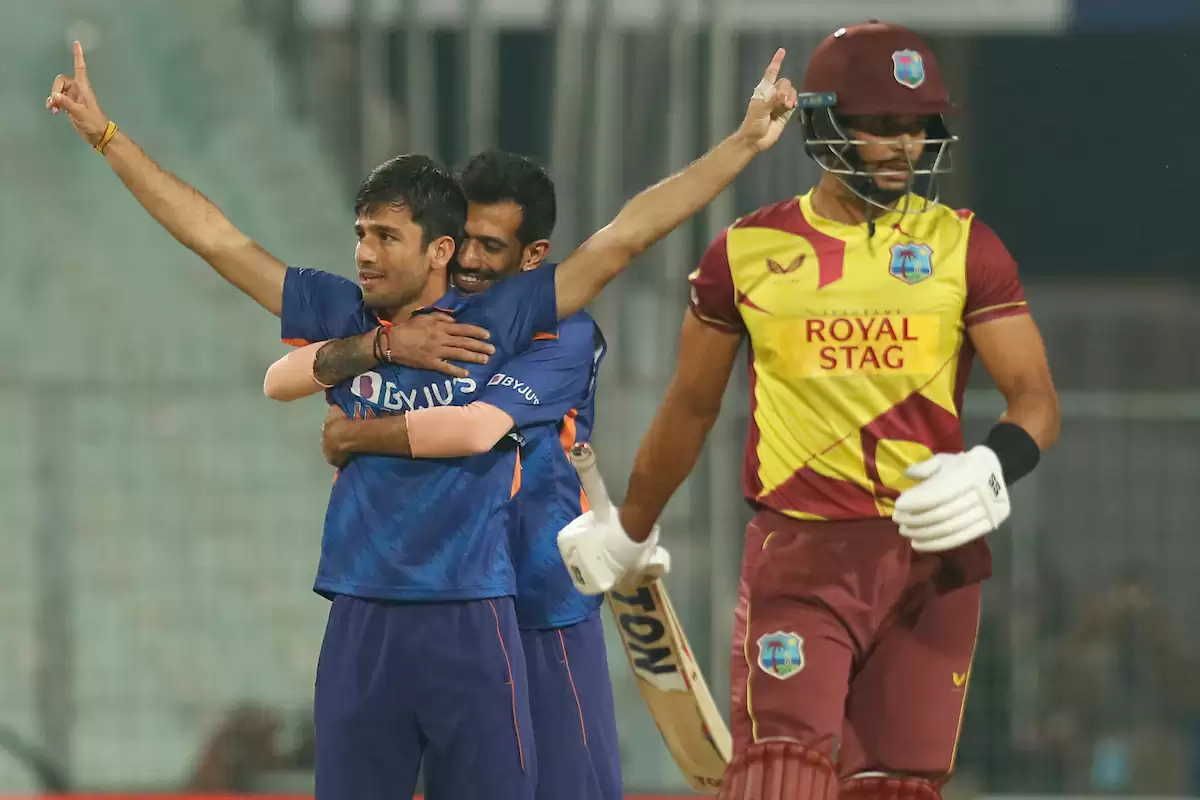
As India flexed their muscles and overpowered West Indies to a 3-0 T20I series whitewash in Kolkata, we take a look at the team’s immediate gains and few key takeaways in the build up to the T20 World Cup in Australia.
The Rohit Sharma-led Indian team proved too good for the visitors in the shortest version of the game. An in-transition West Indies side had their moments in the three games spread over five days, but familiar shortcomings held their horses back at critical stages.
India would know that against such opposition, they may have to second guess their positives and reassess. But, as head coach Rahul Dravid said, it is always better to win and learn than to be learning while you lose.
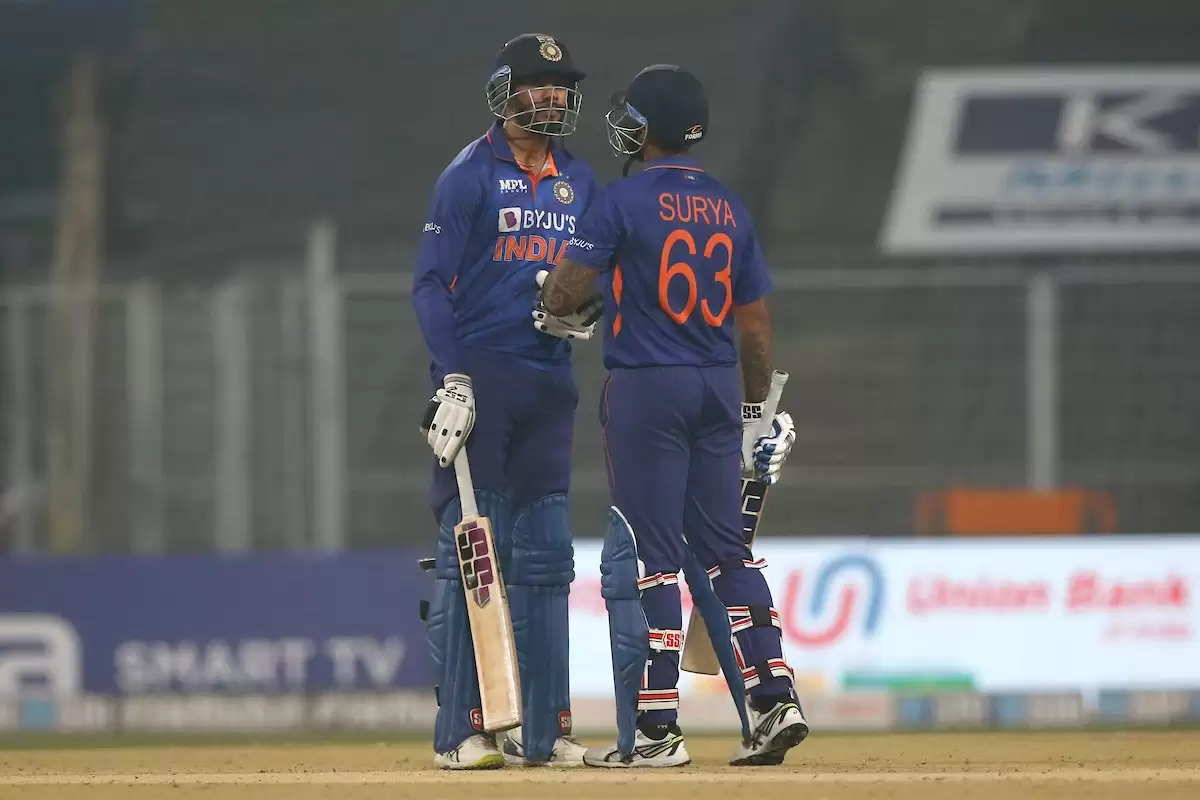
India had multiple positives to take out of the series win over West Indies. (pic courtesy: Twitter/BCCI)
Firstly, the batting. Without a doubt, Suryakumar Yadav is now emerging as a potential next Indian middle-order great. It begs belief that the Mumbai right-hander made his debut only 12 months back as a back-up to Shreyas Iyer. The 31-year-old dominated the hapless West Indies attack in the first and the third T20I, showing wide range, admirable calmness, and a strong temperament in the end-overs. It was most evident in the final game, where he played through the initial stutters that India absorbed before blasting his way to 65 off 31 balls.
Equally encouraging was the performance by Venkatesh Iyer, a player whose breakthrough IPL season with KKR came as an opener but is having to adjust to the demands of a difficult role at No.6 for India. In search of back-up all-rounders, the team management would’ve been pleased to see Venkatesh pile on scores of 24* off 13, 33 off 18 and 35 off 19. He also delivered useful overs in the third T20I and prized out Kieron Pollard and Jason Holder in his 2 for 23.

It allowed India to cover for the absence of an organised batter at No.7 through the series, as Venkatesh seems to be auditioning well for the back-up allrounder slot to which, regardless of this recent phase, Hardik Pandya remains the incumbent at this stage.
On the bowling front, there two major positives in the form of wristspinner Ravi Bishnoi and death-overs quick Harshal Patel. Bishnoi bowled superbly in all three matches, looking very much an integral part of the attack with his unorthodox clock-like action and indecipherable mix of googlies. He took 3 wickets in the series but most notably, delivered his overs with an economy of 6.33 despite bowling with a wet ball for two of those games in Kolkata.
Patel seems to be growing in confidence with each outing. Don’t just go by his economy rate – 8.75 with 5 wickets – he bowled some critical overs at the death for India. Patel’s biggest strength is his slower balls. But what is unique with him is that it’s not surface dependent. The pacer drifts and dips, more than grip it off the deck. It’s a feature of his bowling that shall hold him in good stead for batters, who may be more versed at identifying his release on flat and hard surfaces.
Bhuvneshwar Kumar was India’s most economical seamer for the series, which could be partly down to him starting early in the innings. But the old warhorse reignited hopes of a revival in a career plagued with injuries when he tilted the second T20I in his team’s favour at the death.
Facing the rampaging Nicholas Pooran and Rovmen Powell with 29 needed off the last two, Bhuvneshwar gave away only 4 runs in the 19th over and prized out Pooran’s wicket to nearly cement India’s win. It was a performance that shall earn him some breathing space at a time when he is been tested by a wearing body and stiff competition for places.
The positives were plenty but there was one obvious concern. Left-hander Ishan Kishan struggled to get going throughout the West Indies series, finishing with 71 runs at a pedestrian strike-rate of 85.85. Beyond the numbers, Kishan’s failure to counter swing at the top and spin through the middle overs would’ve caused worries in the Indian camp.
Sticking to the struggles versus spin, Rohit Sharma and Virat Kohli, the two senior pros, too, found it really difficult to put the ball off the square once they were denied pace on the ball. While Rohit can still manage being an opener, for Kohli, a middle-order giant, it is a pertinent issue holding him back for long. Since the start of 2020, Kohli has had a strike-rate of only 103.58 over 195 balls faced in T20Is versus spin.
Kohli’s developing weakness against spin has raised calls for his demotion to No.5 in the batting unit, where he can play more positive match-ups for India. Against pace in T20Is, he has a strike-rate of 157.87 since 2020.
How India manage around Kohli-Rohit’s spin struggles and balance their team, with the expected returns of Hardik Pandya and Ravindra Jadeja in near future will be one of the key focus areas of their T20I game in the coming months.
The selectors have retained all but two individuals from the squad that played against the West Indies, with Kohli and Pant rested and Jadeja, Sanju Samson and Jasprit Bumrah brought back to the side.
It signals that the think-tank is likely to persist with the faces and give them more opportunities to settle. This would be key for players like Venkatesh, Kishan, Bishnoi and Harshal, who are still warming into their respective jobs.
The senior pros Bhuvneshwar Kumar and Yuzvendra Chahal maybe rotated and that might open doors for Mohammed Siraj, Avesh Khan, Kuldeep Yadav at some stage.
From the perspective of their first XI, Samson’s comeback and Jadeja’s return bolsters the side. Jadeja slots right back at 7 with his improving powerhitting game and defensive spin bowling. Samson’s presence at No.4 or No.5 maybe critical as well, as he poses a strong batting option against pace and hard lengths in the build-up to Australia 2022.
If Kishan fails to make his opportunities count in absence of KL Rahul, Samson may pip him in the reckoning for keepers with Pant being the incumbent.
Role clarity, consistency and flexibility. These are three things that have stood out about the Indian team since Dravid has taken over as head coach. Rather than shaking things up too much, he has focused on timely tweaks and looking to maximise the team on the park.
The batting order has carried an element of surprise at times because of the match-ups, but with Dravid, one can be certain such moves are not a shock for the player involved and he would’ve prepared accordingly.
The absence of Hardik and Jadeja has forced him to lengthen the batting and enter the field with make-shift XIs. But even then, he has found a way to extract positives in the way a Venkatesh Iyer has played and still partly ensure the team’s long-term needs are being satisfied, with a Bishnoi and Harshal emerging as solid spin and pace alternatives.
Captaincy tends to be misjudged outside. The man sitting at the helm either gets praised excessively or be at the receiving end of unnecessary blame depending on the result. As such, it is difficult to truly assess how much of an influence Rohit has been on this Indian team, especially facing a struggling West Indies team.
Yet, it would be unfair not to point out how much in command he looked of his players in the T20Is, and before them the ODIs. For those in the know-how of things, Rohit was an influential voice in the team even during the Kohli era. But it was still notable how he guided his troops on and off the field. The opener was in the bowler’s ear from time to time and cared to reaffirm things off the field if someone had failed. Moments after the first T20I was over, Rohit was seen having a lengthy chat with Kishan.
Rohit seems to be a hands-on skipper, who wants to control as many controllables as he can, which could include proper communication on and off the field and opting for a patient route, knowing not every player can immediately find his groove at this level.
The identification for personnel for particular roles could improve, however, as he probably used Deepak Chahar for one over too many beyond the powerplay restrictions. On debut, an Avesh Khan, who could’ve done with the cushion of the middle-overs, was used upfront over the more experienced Shardul Thakur and that may have played a part in his struggles for the night.
But overall, Rohit looked in control.