


A detailed analytical look at the Ben Stokes dismissal against West Indies in the 1st innings of the 1st Test. Over 39.6: Jayden Seales was at the top of his mark, looking around and wiping the sweat off his forehead with his wrist band. He looked nervous. Up until that point, he had set up […]
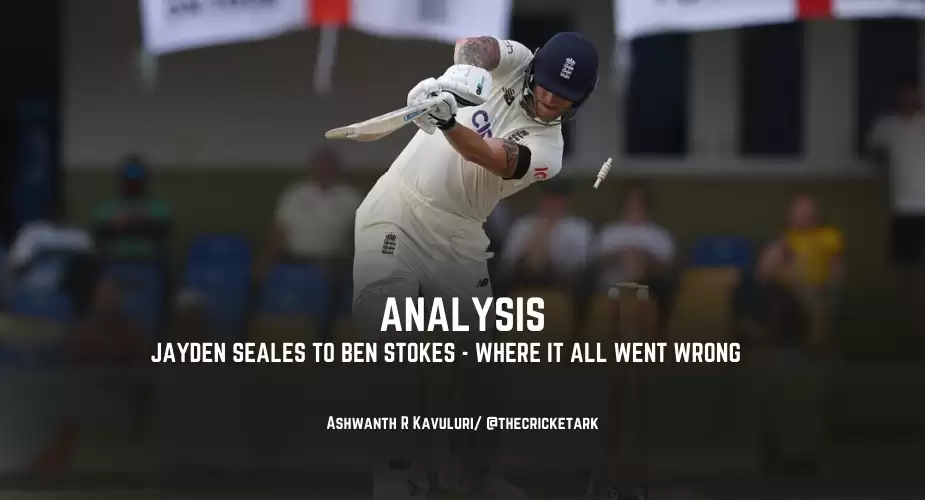
A detailed analytical look at the Ben Stokes dismissal against West Indies in the 1st innings of the 1st Test.
Over 39.6: Jayden Seales was at the top of his mark, looking around and wiping the sweat off his forehead with his wrist band. He looked nervous. Up until that point, he had set up that over pretty well with good lengths and short balls. That was probably his last ball of that spell. He needed to nail it too, to complete the payoff. He started his run-up….
Ben Stokes was standing upright in his stance unlike at the beginning of that over, where he was crouching a bit, he was waiting for another short ball maybe. But it wasn’t a short ball, it was full and at pace. Next thing he knew was he was barely standing even with the support of his bat. The leg stump leaned back like it was trying to relax after hours of standing still.
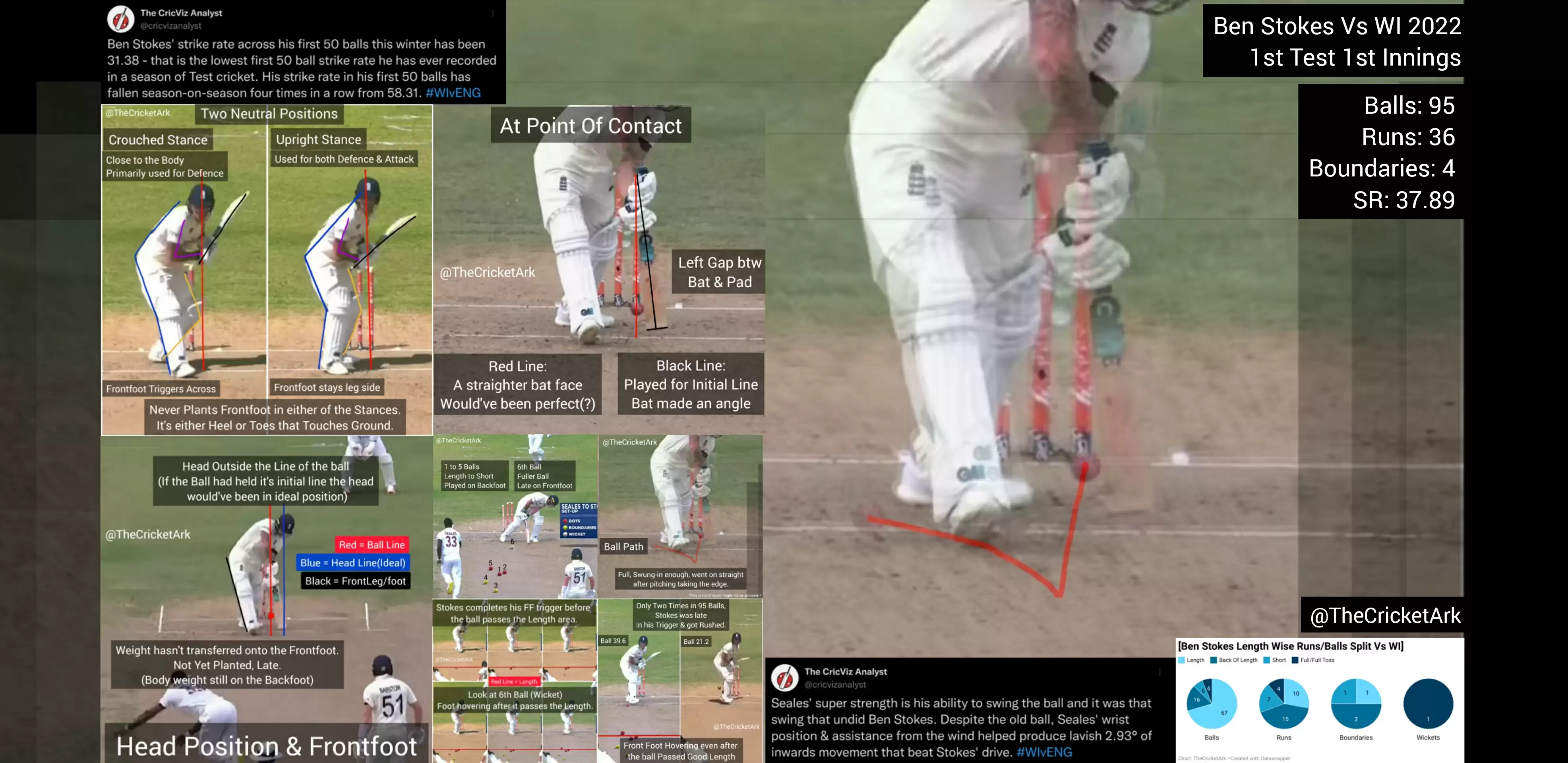 (Poster: Ben Stokes entire Innings Vs WI in One Picture)
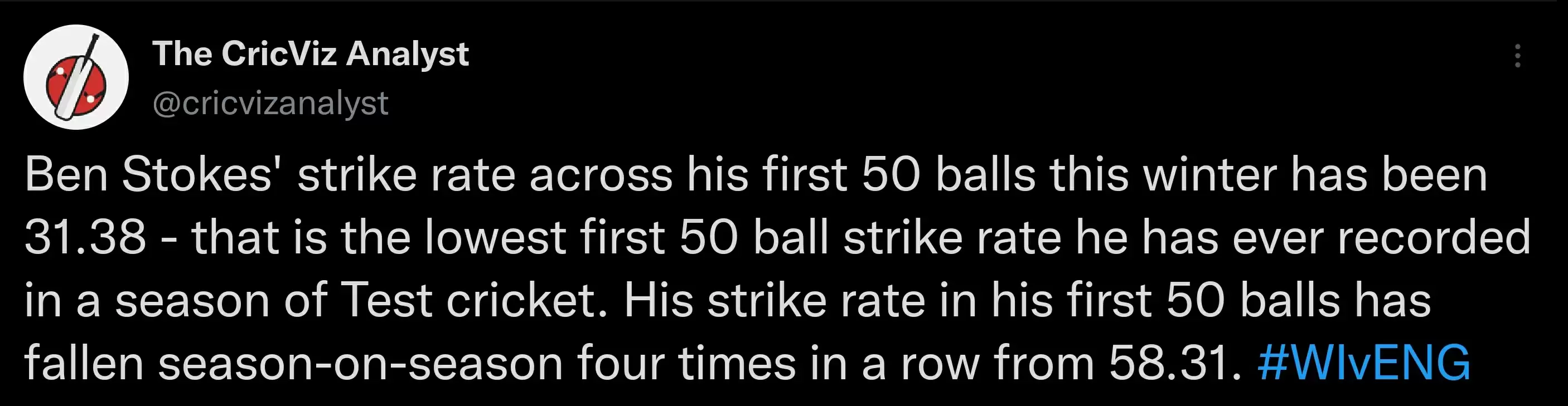
As is the norm, England’s top order collapsed and at 8.2 overs with 27/3 on board, Ben Stokes was at the crease. He once again needed to get in and prevent any further damage. So he started off slowly as he has been doing for the past couple of years now. His strike rate in the first 50 balls this season is an indication of it. Not that the rate of scoring matters in Tests, but the gradual decrease in his rate while starting off over the years tells he’s getting more and more cautious at the start of the innings.

 He mostly played close to the body and left a lot of balls. West Indies too were very consistent with their line and lengths, he didn’t get too many bad balls.
Let’s have a look at his technical aspects, point out some key details before the dismissal to try and make sense of why and how it happened and what other factors played a part in it.
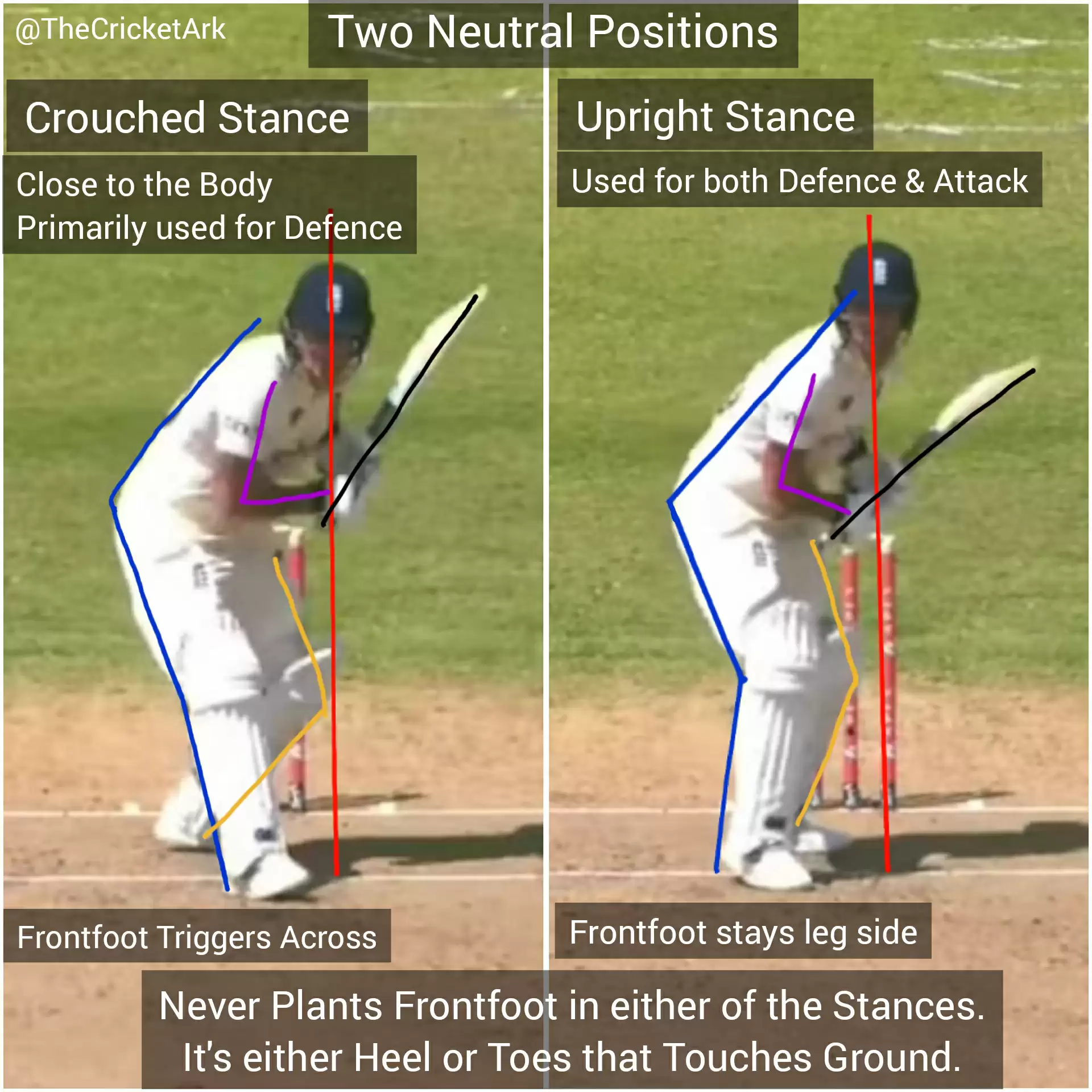
Ben Stokes uses two different triggers. Both triggers start with the back foot going back. The difference starts with the front foot. For the crouched stance the front foot goes across the stumps and for the upright stance the front foot moves just back along with the back foot.
These two triggers eventually lead to two different neutral positions.
Both these triggers are completed before the ball passes the good length area (more details about this in the ‘Incomplete Trigger’ section), setting himself up comfortably for the shot.
 As the innings progressed, he started to find his rhythm. It was clearly visible with the way he picked up his bat and got into attacking stances that he wanted to up the scoring rate.
This is how Jayden Seales Over went:
Ball 1: Good length, pushed to mid-on; Runs: 0.
Ball 2: Good length, edged but just short of 1st slip; Runs 0.
Ball 3: Short ball, pulled; Runs 4.
Ball 4: Back of length, leg glanced; Runs 4.
Ball 5: Good length but fuller than 1st 2 balls, down leg; Runs 0.
Ball 6: Fuller half volley at Pace, moving in. OUT.
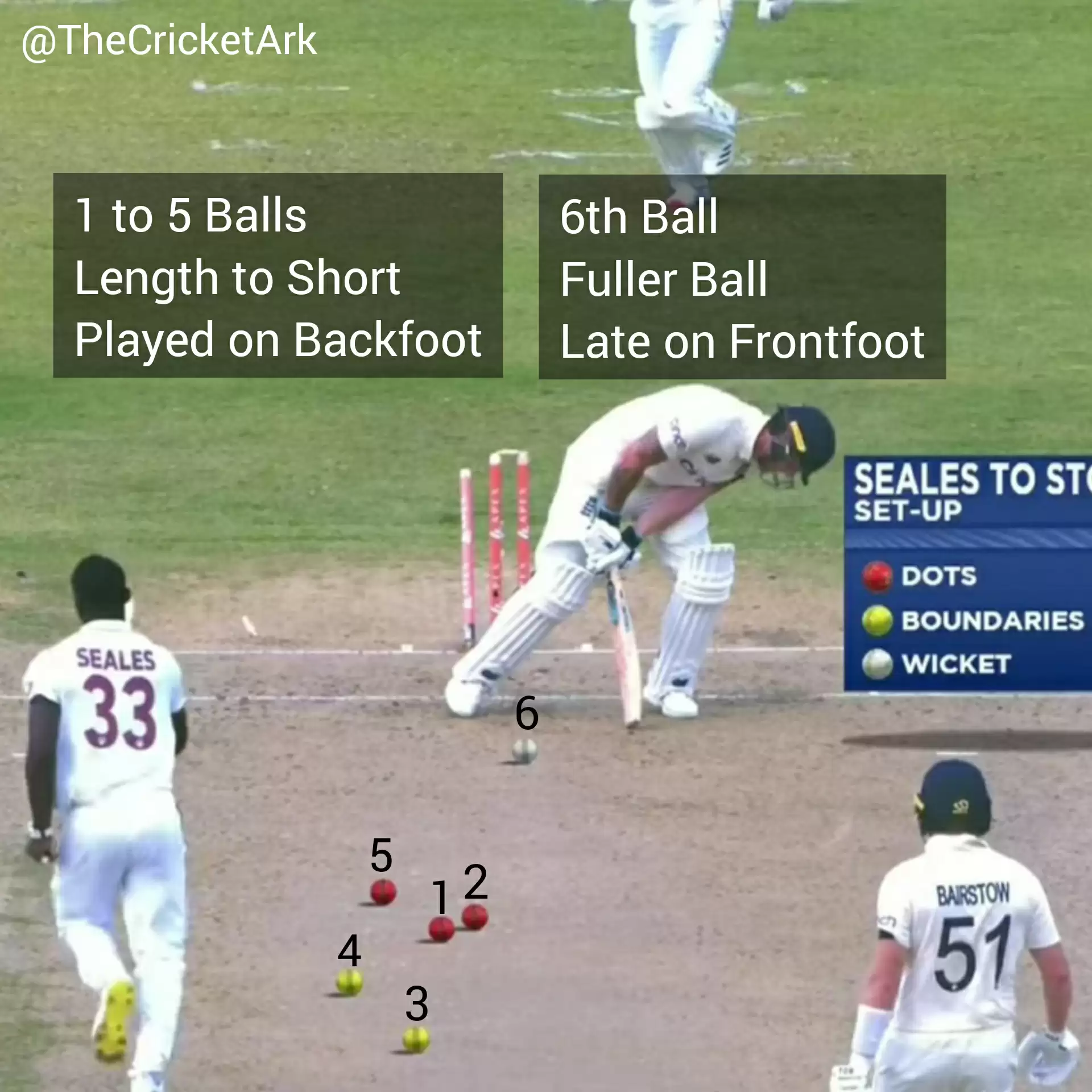 The Dismissal:
Last ball of the 40th over, in the post session interview with Mark Butcher, Jayden Seales revealed the captain had said that “You’ve got one over left, give me everything you’ve got.” So Seales probably would’ve been taken out of the attack if he hadn’t got that wicket.
The previous deliveries in that over were mostly behind good length. That is probably why Stokes was in his upright stance, expecting more of a short ball. So, as he was starting his trigger, his mind would naturally take his front foot back (upright stance for tackling back of length and short balls) with weight transferring onto the back foot.
But once he saw the ball fuller, he tried to play an aggressive front foot off drive without proper transfer of the weight onto the front foot, almost like he never wanted to go onto the front foot and commit to the shot. Still he went through with the shot, perhaps as an afterthought shot – the head position being way outside the line of the ball didn’t help him either, and it made him more imbalanced, which can be told from the follow through of the shot.
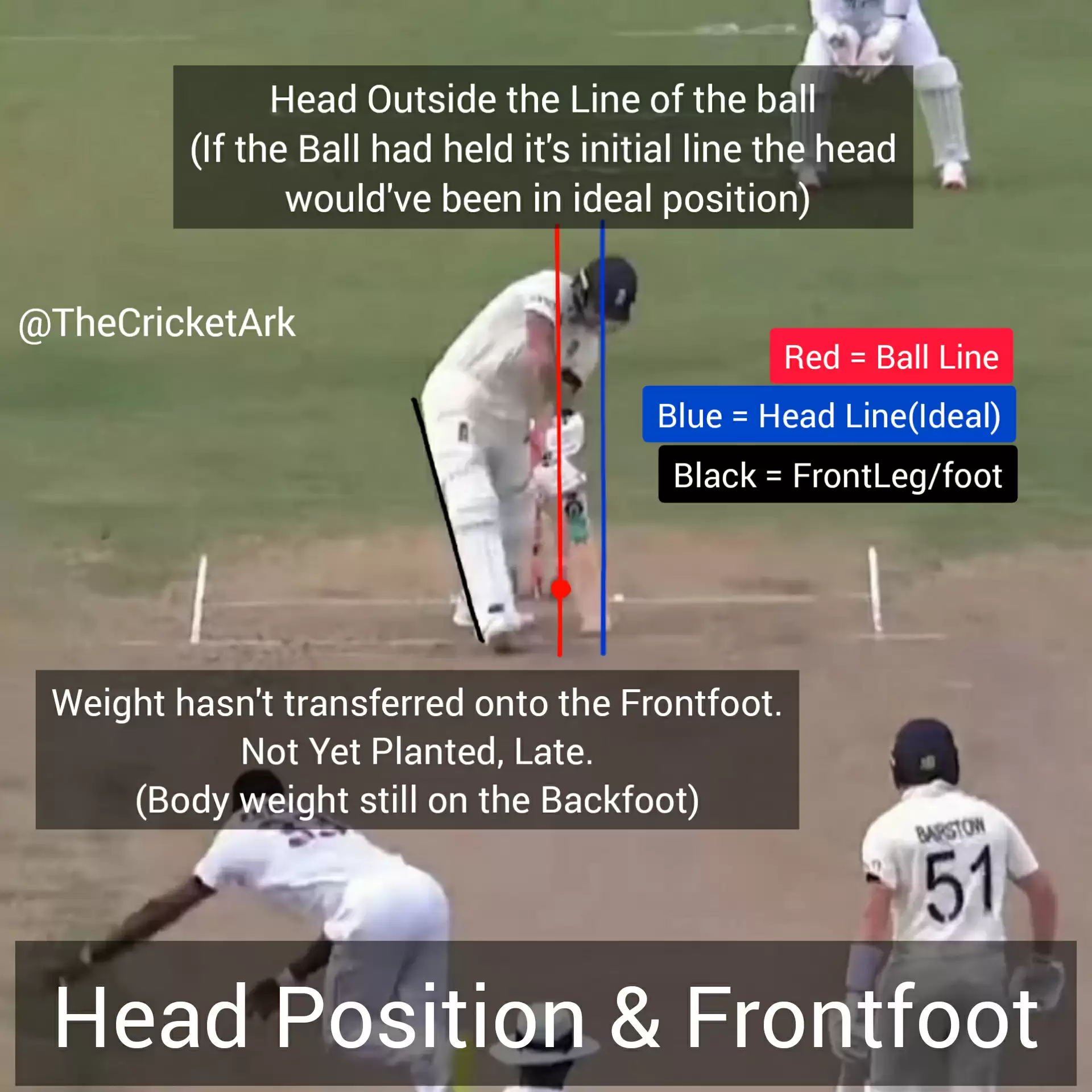 There is a reason for the head being outside the line of the ball which will be explained in detail later.
As discussed before, Stokes has two front foot triggers: one across and one just back. The common thing between these two triggers is that he completes both before the ball passes the good length area (which most batters do). The ball does not necessarily have to hit the surface, it can be in the air passing or pitched shorter and then pass the good length area. The trigger has to be completed before the ball passes the good length area because the batter needs to get into the neutral position at the right time so that they can spot the length early and play the shot accordingly.
Stokes didn’t complete his front foot trigger only just twice in the 95 balls he faced in that innings. One was off Over 21.2, which was a full toss, by Alzarri Joseph to which he got rushed for pace and surprised. The other was ball 39.6, a fuller ball by Jayden Seales to which Stokes got out.
Incomplete Trigger = Late Neutral Position = Late/Bad Shot Selection
This breaks the Rhythm of the Batter.
Usually this is when he completes the trigger.
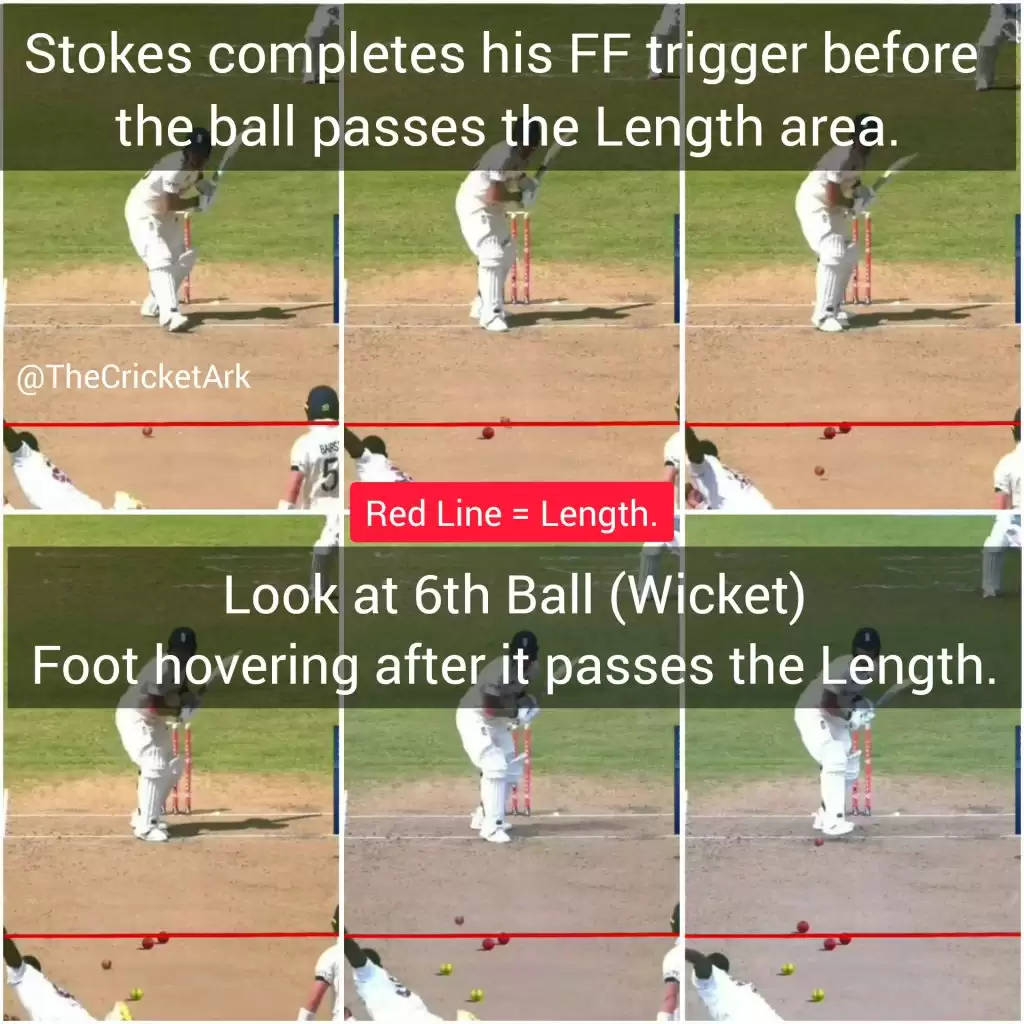

So, in the 1st image you can see Stokes completing his trigger five times, before the ball passes the good length area (marked with red line) and the 6th time is the incomplete trigger. The 2nd image is the two balls where he didn’t complete his trigger and you can see his foot is in the air.
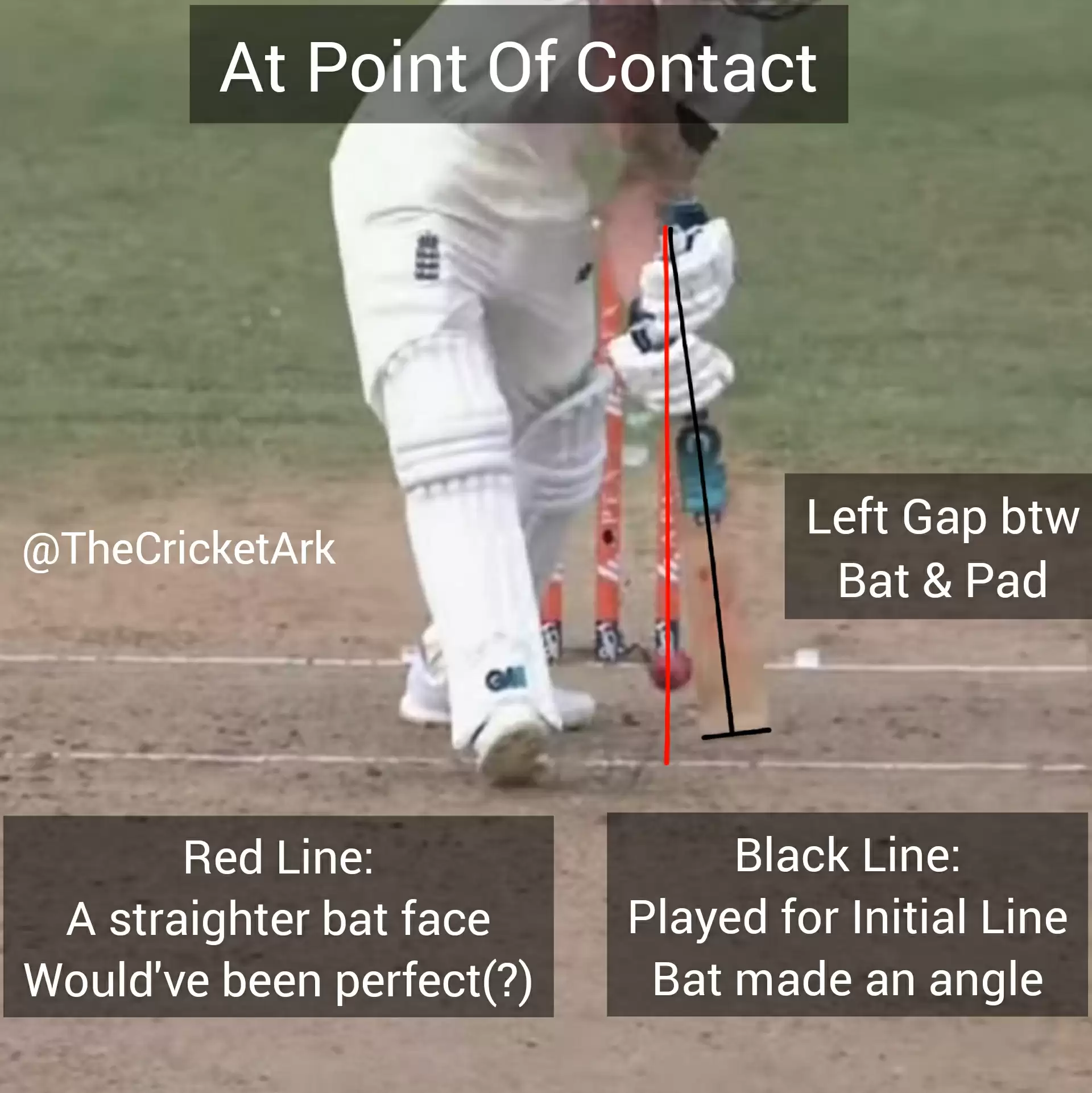
This was the most interesting aspect in the whole thing. The bowling was pretty straight forward with little to no swing found in the most recent overs leading up to the dismissal. The ball was almost 40 overs old. So, with the initial line the ball started, Stokes played a shot that would’ve been ideal and perfect; on the 4th stump line. But it was not the perfect stroke as the ball was full, and it allowed the ball to swing-in just enough & after pitching it went straight on taking the inside edge of the bat onto the leg stump. BOWLED.
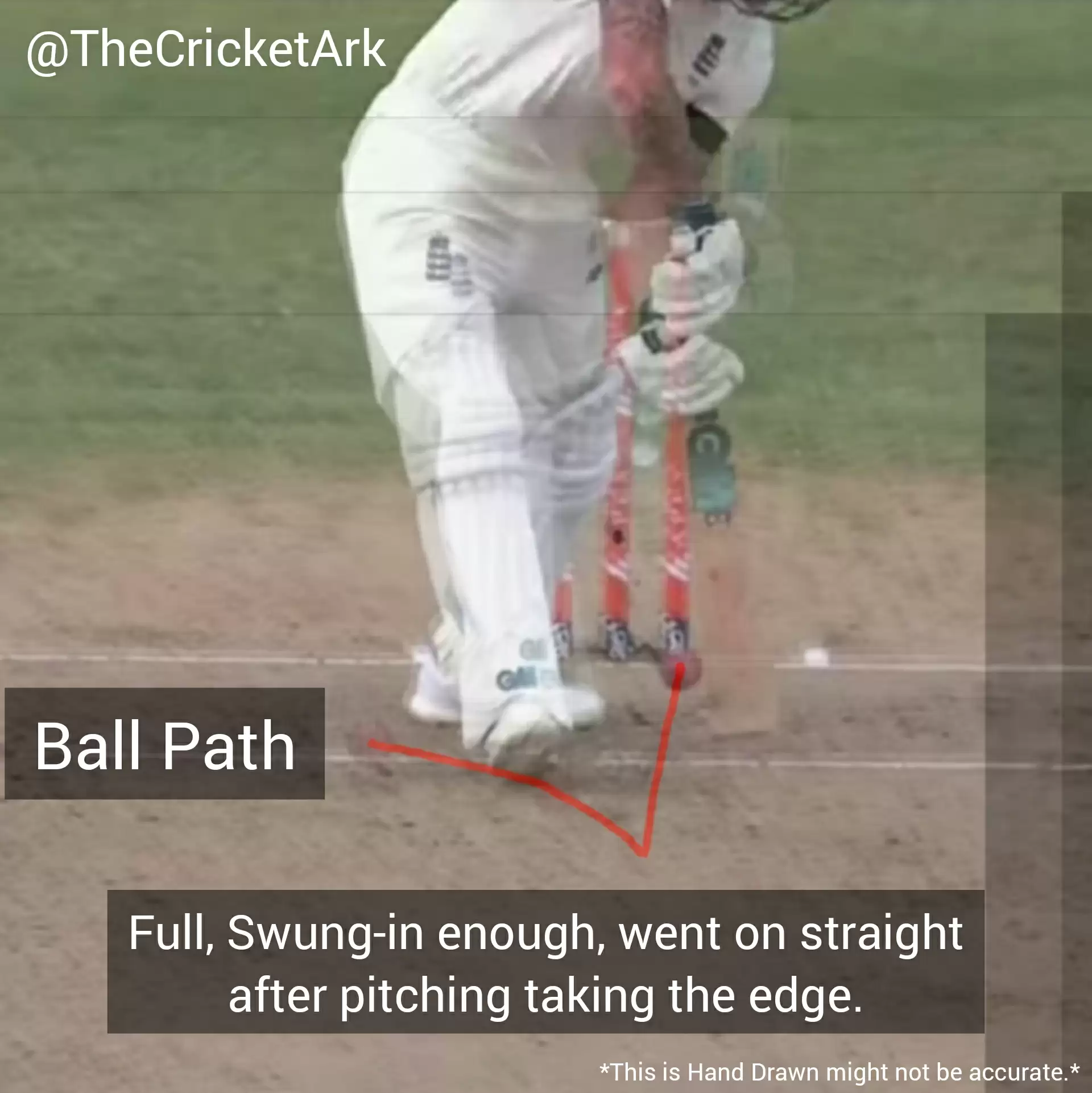 (*The Ball Tracked here is done by hand, and might not be accurate to the T*)
Jayden Seales got pace and he presented a beautiful seam. He also developed the ability to swing it both ways. As the ball got 40 overs older one might not expect such sharp swing.
CricViz says good wrist position & assistance from the wind helped it move inward by 2.93 degrees.
 Remember that Stokes’ head position was way outside the line of the ball?
Yes, that is why. Stokes playing for the initial line automatically took his head outside the off-stump line, where the ball might’ve ended up if not for the in-swing, as the ball moved in, the head stayed where it was making Stokes unstable and fall over (well it’s not that easy for the head to move as swiftly as a 160 gram cricket ball with revs and wind on its side so it stayed where it was).
So the ball and nature both betrayed Stokes, even after he presented his everything (a full faced bat). It wasn’t enough, the bat made an angle and left a big gap between bat and pad. Had he counted for the in-swing, the ideal shot here would’ve been a straight drive with a straight bat. Just like a certain Tendulkar used to do a decade ago. He didn’t count the swing, hence the angled bat, gap, inside edge and a rattle behind.
 Length-wise runs and balls split:
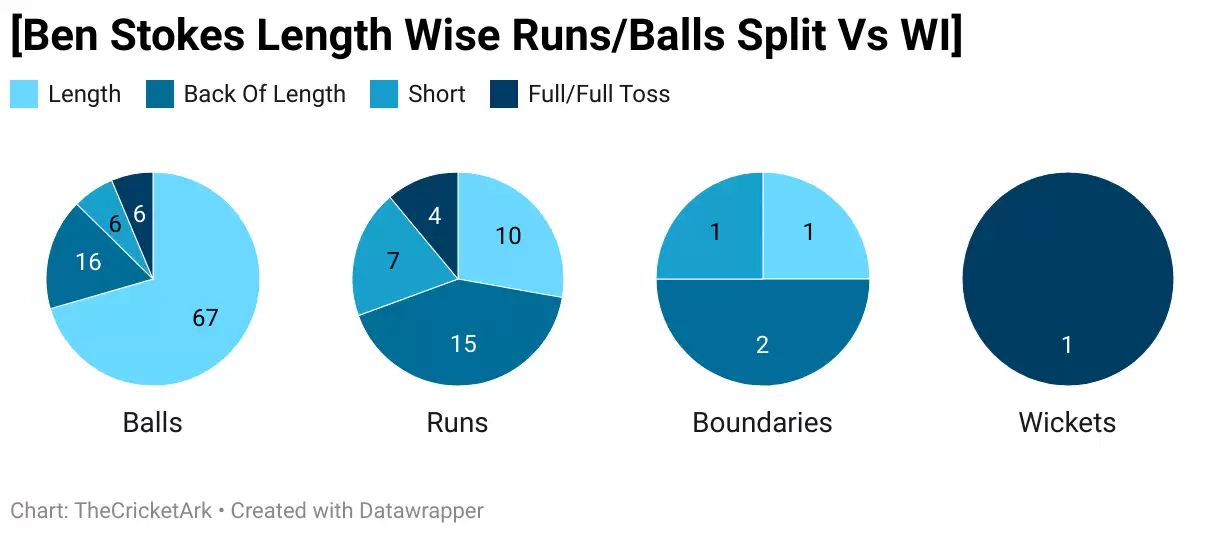
As I said earlier, the West Indies were pretty consistent with their line and lengths. 67 of the 95 balls Stokes faced were on length and he scored just 10 runs from that length. He looked and played comfortably against short balls and back of length deliveries, scoring 22 runs off those lengths in the 36 runs.
Length 67 Balls: 10 Runs (1 Four).
Back of Length 16 Balls: 15 Runs (2 Fours).
Short 6 Balls: 7 Runs (1 Four).
Full/Full Toss 6 Balls: 4 Runs, 1 Out.
Total Balls: 95
Total Runs: 36
Total Boundaries: 4 Fours 0 Sixes
 Yes, he is lacking form but still has been very good against back of length and short deliveries. Looking at the length-wise split, the attack line and length to contain him has to be good and fuller length, outside off.
***
Ben Stokes was set, looked ready to spread his wings and fly away with a big score against his name just like he consistently did a couple of years back. Had he stayed with Bairstow for a little longer that huge score would have happened. But no, he got out, against the run of play perhaps, at a very bad time and Bairstow had to do it all alone. He did what he could with a blazing 140 and took the team’s total to 311 from 48/4 at one point.
But, England needed Stokes to stay there, so they could have that huge total on board. England needed Stokes to stay vigilant, to see them through the impending danger. England needed Stokes on the FRONT FOOT.